
India has emerged as one of the most attractive destinations for global manufacturing and sourcing. With a skilled workforce, competitive costs, and strong government support, the country is becoming a key part of global supply chains.
Today, international companies are not just looking at India as a low-cost option — they see it as a strategic manufacturing and sourcing hub with long-term growth potential.
If you are planning to manufacture or source products from India, this guide will walk you through everything you need to know — step by step.
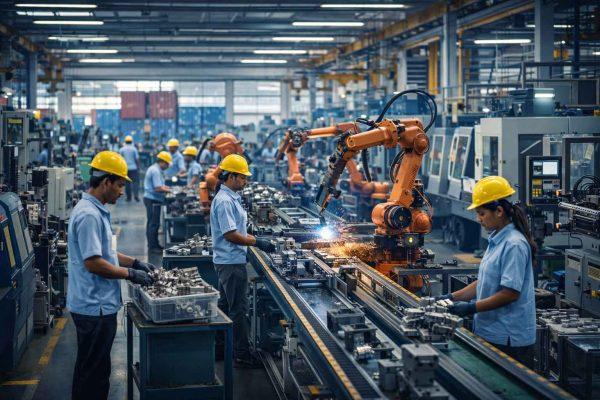
Why Global Businesses Are Choosing India
India offers several advantages that make it ideal for manufacturing and sourcing:
- Cost Advantage with Quality
India provides cost-effective production due to lower labor costs and operational expenses, while still maintaining high-quality standards.
- Skilled Workforce
The country has a large pool of engineers, technicians, and skilled workers across industries like electronics, textiles, and automotive.
- Strong Government Support
Initiatives like Make in India aim to attract foreign investment and boost domestic manufacturing by improving infrastructure and policies.
- Diverse Manufacturing Ecosystem
India produces a wide range of goods including:
- Textiles and apparel
- Electronics and components
- Pharmaceuticals
- Auto parts
- Chemicals and engineering goods
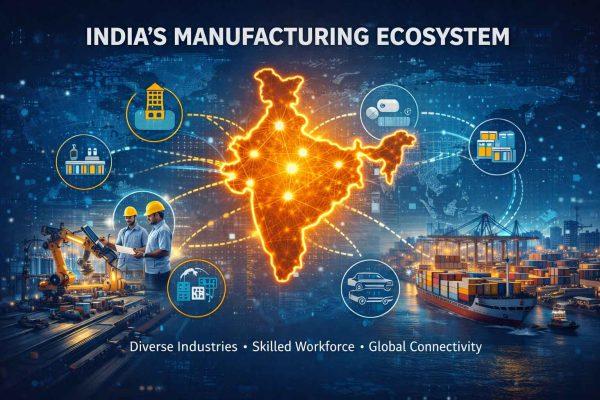
Step-by-Step Guide to Start Manufacturing or Sourcing in India
Step 1: Define Your Business Model
Before entering India, decide your approach:
- Direct manufacturing (set up your own factory)
- Contract manufacturing (work with Indian manufacturers)
- Product sourcing (buy from suppliers/exporters)
Each model has different investment, risk, and control levels.
Step 2: Understand Legal and Regulatory Requirements
India has a structured regulatory system. You need to consider:
- Company registration under the Companies Act
- Foreign Direct Investment (FDI) policies
- GST (Goods and Services Tax) registration
- Import-export regulations and IEC code
Tip: Working with a local consultant helps ensure compliance and faster setup.
Step 3: Conduct Market Research
India is not a single uniform market — it operates more like multiple regional economies.
- Different states specialize in different industries
- Manufacturing clusters exist (e.g., textiles, auto, electronics)
- Costs and infrastructure vary by region
Proper research helps you choose the right location and suppliers.
Step 4: Find Reliable Manufacturers or Suppliers
There are multiple ways to find suppliers:
- B2B marketplaces like IndiaMART, TradeIndia
- Trade fairs and exhibitions
- Export Promotion Councils
- Sourcing agents or buying houses
Using a sourcing partner can reduce risk and speed up the process.
Step 5: Verify and Audit Suppliers
Supplier verification is critical to avoid risks.
Check:
- Company registration (CIN)
- GST registration
- Certifications (ISO, BIS, industry-specific)
- Export experience
- Factory audits and quality standards
Third-party inspection agencies can help ensure quality compliance.
Step 6: Request Samples and Test Quality
Before placing bulk orders:
- Order product samples
- Test for quality, durability, and compliance
- Conduct lab testing if required
This ensures your product meets international standards.
Step 7: Negotiate Pricing and Terms
Key points to negotiate:
- MOQ (Minimum Order Quantity)
- Pricing and payment terms
- Production timelines
- Quality standards
- Packaging and labeling
India often offers flexible MOQs, making it easier for businesses to start with smaller orders.
Step 8: Ensure Compliance and Certifications
Depending on your target market, you may need:
- ISO certifications
- CE, RoHS (Europe)
- FDA (USA for food/pharma)
- ASTM, CPSIA (USA compliance)
Compliance is essential for smooth international trade.
Step 9: Plan Logistics and Shipping
You need to plan:
- Shipping method (air or sea)
- Freight forwarders
- Customs clearance
- Documentation (Invoice, Bill of Lading, Certificate of Origin)
Shipping timelines vary:
- Sea freight: 20–40 days globally
- Air freight: 3–5 days
Step 10: Build Long-Term Supplier Relationships
Success in India is not just transactional — it is relationship-driven.
- Build trust with suppliers
- Maintain regular communication
- Visit factories when possible
Strong relationships lead to:
- Better pricing
- Consistent quality
- Priority production
Common Challenges (And How to Overcome Them)
- Quality Control Issues
Solution: Conduct inspections and audits
- Regulatory Complexity
Solution: Work with local experts
- Communication Gaps
Solution: Use sourcing agents or local teams
- Supply Chain Delays
Solution: Plan buffer timelines and diversify suppliers
India’s regulatory environment can be complex, so proactive compliance and monitoring are essential.
Best Industries for Manufacturing and Sourcing in India
Top sectors include:
- Electronics & semiconductors
- Textiles & apparel
- Automotive components
- Pharmaceuticals
- Renewable energy
- Chemicals and engineering goods
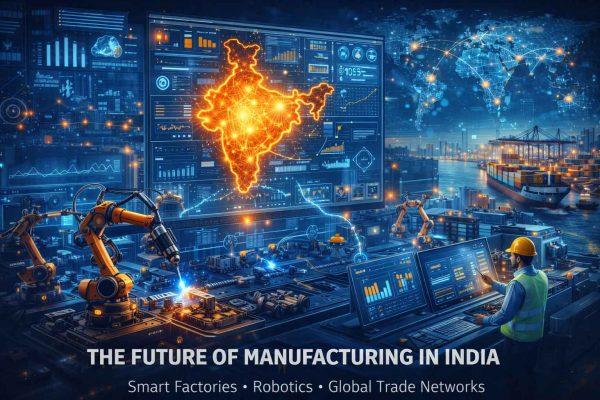
Future of Manufacturing in India
India is becoming a key part of the “China+1 strategy”, where companies diversify supply chains to reduce risk.
Global companies are increasingly choosing India due to:
- Cost competitiveness
- Political stability
- Growing infrastructure
- Expanding export capabilities
Conclusion
India is no longer just an alternative manufacturing destination — it is becoming a core global sourcing and manufacturing hub.
By following the right strategy — from market research to supplier verification and compliance — global businesses can successfully build a strong supply chain in India.
The opportunity is massive, but success depends on planning, local understanding, and the right partnerships.
About Instant Advice Services
Instant Advice Services helps global businesses start and expand operations in India. Our services include company registration, manufacturing setup, sourcing support, legal compliance, and market entry consulting.
If you are planning to manufacture or source products from India, our team can guide you at every step.

